Guide Test Practice 1 - Data about People
1 Writing about gender and age
Cambridge IELTS 12, page 27
male and female are adjectives (male students, female students, etc) but the same words are also nouns:
The number of females increased while the number of males decreased.
We might need to talk about ‘the female’ and ‘the male’ if we are given a life cycle of an animal, with charts and data, we are always writing about more than one, so we should not be using the singular form unless when we use it as a adjective.
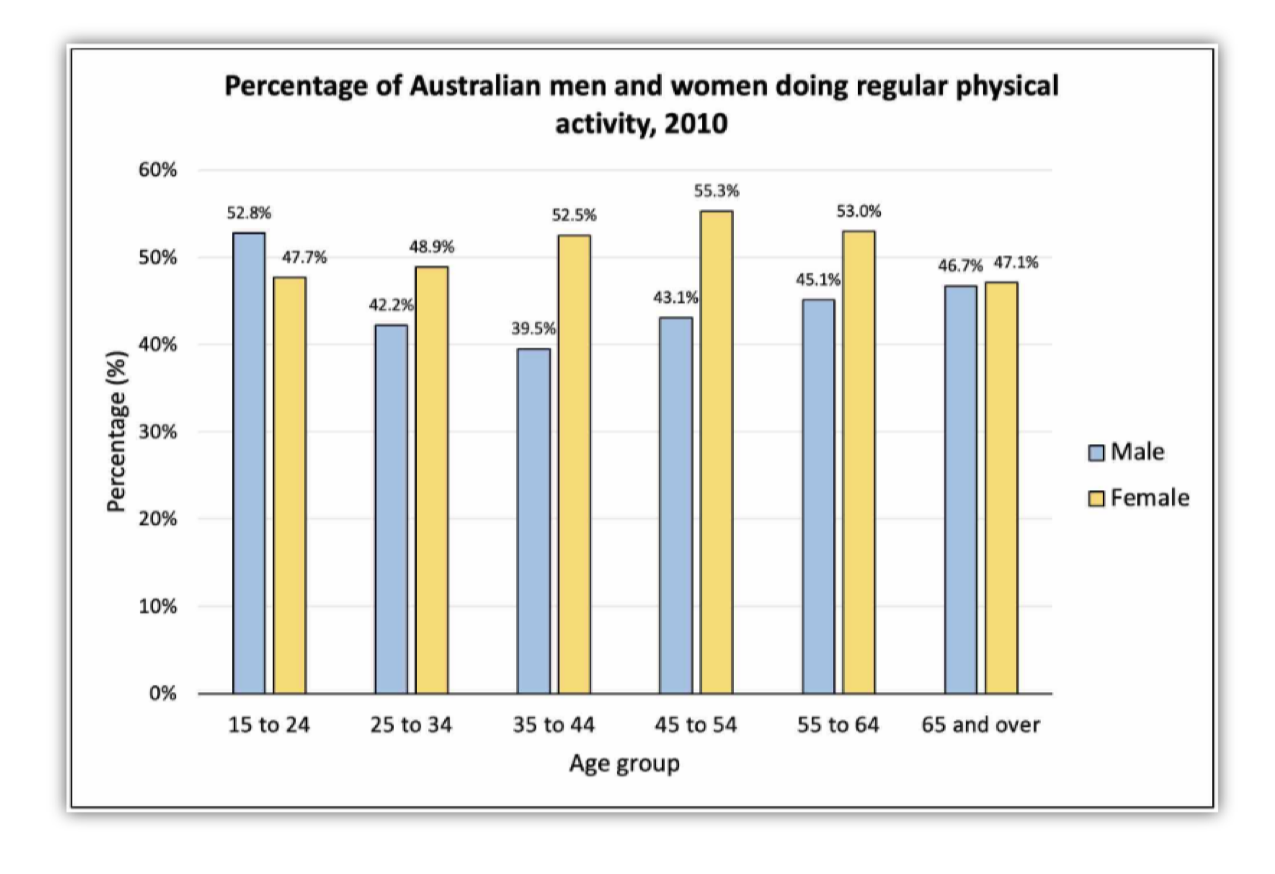
In introduction and overview, we can make a general statement about males and females, or men and women. We can also add the nationality, to describe the main trends in the behavior of Australian men and Australian women in 2010. However, in our body paragraphs, we will mainly refer to the specific age groups.
We only use ‘stage’ or ‘period’ to talk about a stage or period in life. For example, ‘childhood, the teenager years’ and ‘adulthood’ are all examples of stages or periods in life. However, these terms are not appropriate for our data, which is divided into specific age group or age ranges.
1.1 Prepositions
Look at the following examples then the rules below:
- Women aged 25 to 34 …
- Men aged between 35 and 44 …
- Women who were 25 to 34 years old …
- Men in the 25- to 35-year-old age group…
- This fell from 24 years
We use ‘at’ with ‘the age of’ and ‘in’ with an age group or range. When it comes to specific ages, we can used aged, years old or year-old. When giving data like this, we can also just write the ‘number + years’
1.2 Hyphens
We use hyphens when the number combines with ‘year-old’ to form a compound adjective or a compound noun. So, we can write the following:
- I taught a class of ten-year-olds. (compound noun - plural)
- I taught a class of ten-year-old children. (compound adjective)
If we are using a range of ages, we use a hyphen with both numbers in the range:
- I taught a class of 20- to 25-year-olds. (compound noun in a range)
The final age group is often presented like this: 60+, 65+ etc. We can express this in two ways:
- Men aged 60 and over …
- Women aged 65 and above…
1.3 Specific age groups
A generation is generally seen as 25 years, so the groups in our data do not represent different generations. Teenagers are people aged thirteen to nineteen, so we cannot use this tern for the youngest age group, which goes up to 24. Be careful with ‘middle’ as it has a specific meaning when combine with ‘age’. Middle-aged refers to people aged between approximately 40 and 60. You can refer to the ‘middle age groups’ (meaning the groups in the middle), but you need to be careful in using this.